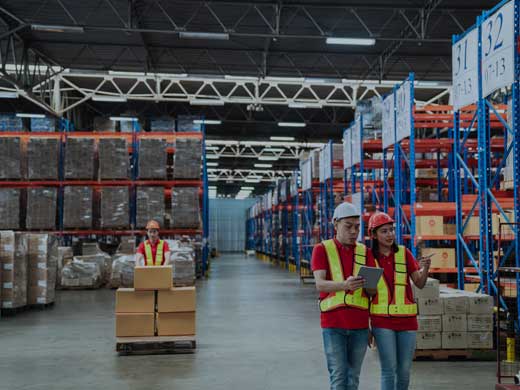
A food company that wants to remain healthy in the long term must monitor its vital signs in real time.
Just as health-conscious individuals track their daily steps or heart rate, businesses benefit from monitoring their vital signs, or key performance indicators (KPIs), in real time. These allow you to:
1) Track your progress toward achieving your goals
Indicators aligned with your goals tell you whether you are on the right track.
If your objective is to increase your production flow, the right indicators will allow you to review your current data, make period-to-period comparisons, and assess your company’s progress.
2) Better Understand Your Challenges
Analyzing the data provided by your key indicators gives you insights into your business.
You might notice, for example, that your food waste increases when using a component from supplier X, or that extreme weather affects the efficiency of your manufacturing equipment.
By tracking the right indicators, you can analyze your data and know where and when these phenomena occur, allowing you to take proactive action.
3) Benchmark Your Business Against Industry Data
Tracking your indicators lets you gauge your performance compared to industry averages. For example, if your gross margin is X% and the industry average is Y%, you know you need to adjust the allocation of your resources to increase your margin.
Given the crucial role of key performance indicators, one might wonder why many food and beverage companies are still slow to use them to guide decisions, reduce waste, and boost productivity and profitability.
Why Data Collection Is a Challenge for Some SMEs
Too many business owners are content with the status quo in managing their reports, without fully appreciating the risks for their growing company.
For example, if inventory and production data from different business functions are stored in separate spreadsheets, accounting software, or even paper reports, the data sources don’t communicate. And if the data is updated only periodically—for instance, to coincide with the accounting close—when it comes time to make a decision, the reports don’t reflect the current state of operations. They instead provide a snapshot based on the last data entry, which may be several days old.
Moreover, the data was likely entered manually multiple times by different team members. Imagine all the time lost on these repeated entries, not to mention the human errors that likely compromise the data.
Fortunately, there are more efficient ways to collect data and generate accurate reports that support growth and productivity.
How to Access Your Data and KPIs in Real Time
Enterprise Resource Planning (ERP) software allows you to standardize and centralize your data in a single database updated with each data entry.
This way, you always have access to your most recent business data. The right ERP system allows you to customize your KPIs by business function and consolidate them on your dashboard. At the exact moment you consult it, the system provides an accurate picture of your company’s situation.
To elevate your food business to a competitive level, your team will need to invest time in defining all your work processes and implementing the ERP system. An experienced vendor will guide you through this process and train your staff to work efficiently with the system.
If you doubt the value of such an investment, consider the costs of not investing. Your need for reliable real-time data grows proportionally with the volume and complexity of your business, and the decisions you make based on this data become increasingly consequential. Is it feasible not to invest?
How to work with KPIs
Once your ERP software is installed, you will discover a wide range of indicators that you can customize to guide your decision-making process. How can you optimize the use of KPIs? Here are our recommendations:
1) Focus on a Few Key Indicators
Track the indicators that directly align with the objectives of your business plan. This allows you to measure your progress and make decisions based on your goals.
2) Keep a Balanced View of Your Indicators
Don’t make the mistake of focusing on a single indicator.
For example, if you prioritize increasing production flow, you should also monitor food waste, rejects, and unproductive hours of your high-performing production equipment.
Maintaining this balanced view across multiple KPIs will help you avoid costs from product loss and wasted production time.
3) Track your KPIs Over Time
The history of your metrics provides insights into your company’s performance and the factors that contribute to it.
4) Consolidate Your Indicators on Your Dashboard
The best ERP software allows you to group your indicators on your dashboard. Each team can access its own indicators to monitor progress.
Which indicators will boost your company’s productivity and profitability?
For food manufacturers and processors, some indicators are particularly valuable. Consider the following five:
KPI #1: Manufacturing Efficiency
Manufacturing costs represent such a significant portion of your cost of goods sold that any improvement in efficiency can substantially impact your profitability.
The indicator that measures your production efficiency calculates recipe yield by comparing actual production values to expected values. The higher the ratio, the better the ROI.
This indicator takes into account raw material losses (expired) and finished product losses, as well as recipe errors.
KPI #2: Inventory Turnover
This indicator ensures proper inventory rotation and alerts you when components need to be used quickly.
It calculates the number of times your company sells and replenishes its inventory over a period (e.g., year, month, day). You obtain the inventory turnover rate by dividing the cost of goods sold by the average value of your inventory.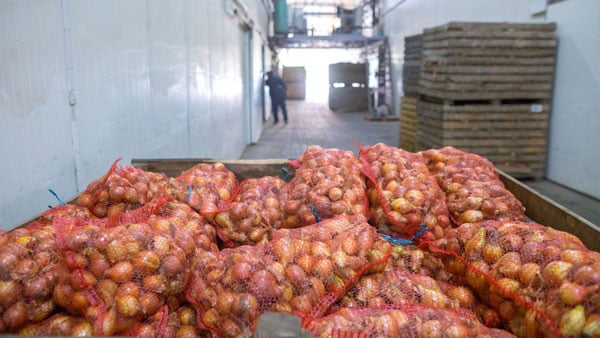
A low ratio indicates low sales volume and excess inventory. A high ratio indicates high sales volume or low inventory levels.
KPI #3: Raw Material Cost Variance
This indicator lets you track in real time the variance between your actual raw material costs and your planned costs.
Having accurate, detailed real-time data makes it easier to drill down into your costs and understand the causes of increases. This allows you to follow up with suppliers and potentially renegotiate volume contracts or identify errors on their part.
KPI #4: Production Line Yield
Yield is the percentage of product X produced according to standards that does not need rework or is not rejected. For example, if you produce 100 units of X and only 86% are ready for shipment while the industry standard is 94%, you may want to review your manufacturing process.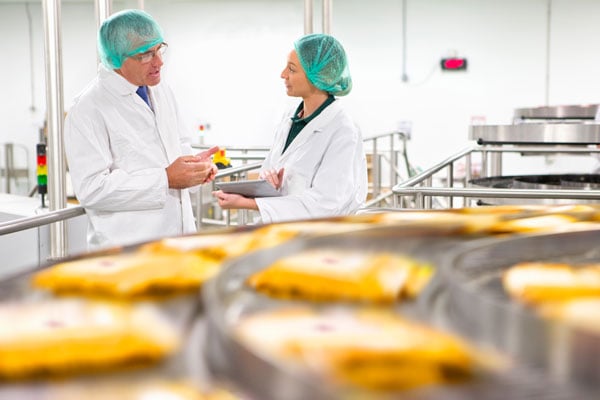
Analyzing these variances might lead you to ask questions such as:
- Are certain suppliers affecting our yield?
- Is our recipe truly optimal?
- Does our new packaging equipment perform better than the old one?
- Is this an issue related to shift schedules or supervision?
Your yield also affects the current value of your production line, which may differ from the estimated value. Variance analysis could show that some suppliers negatively impact your production capacity.
KPI #5: Margin by Product, Customer, and Day
What is your operating margin per product? It represents the profit generated on product X minus variable production costs, such as labor and raw materials, including interest and taxes.
This data is particularly useful, for example, when selling to a large grocery chain.
In this context, your cost model may account for major cost categories. However, many costs can go unnoticed, such as warehouse loading fees, commissions, discount programs, promotions, sales agents, and transportation costs, among others.
Tracking this indicator allows you to know, at all times, every dollar of profit you generate per product for any customer. Knowing your operating margin also provides a useful benchmark when comparing your business to others in your sector.
The Benefits of Closely Monitoring Your Valuable Key Performance Indicators
Given the competition in the food market, margins are generally low. By keeping an eye on your indicators, you can:
- Track your production flow in real time and adjust it to demand.
- Reduce waste and plan your purchases more effectively.
- Limit losses from unproductive hours due to equipment downtime following overuse. (You may be pushing production too hard to catch up on delays and neglecting preventive maintenance.)
For sustainable success, every food business, especially a growing one, must monitor key performance indicators. The right indicators will allow you to track and analyze your data to make better decisions that increase your company’s productivity and yield.
If you have more questions, do reach out to us.


.svg)